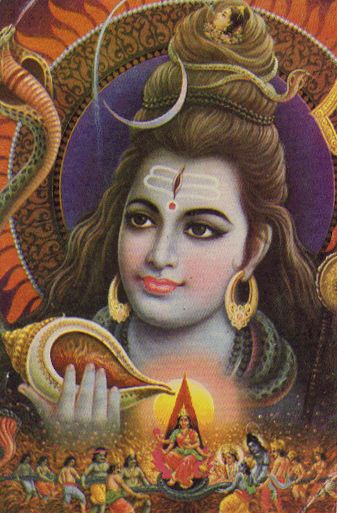
What is Pradhosham?
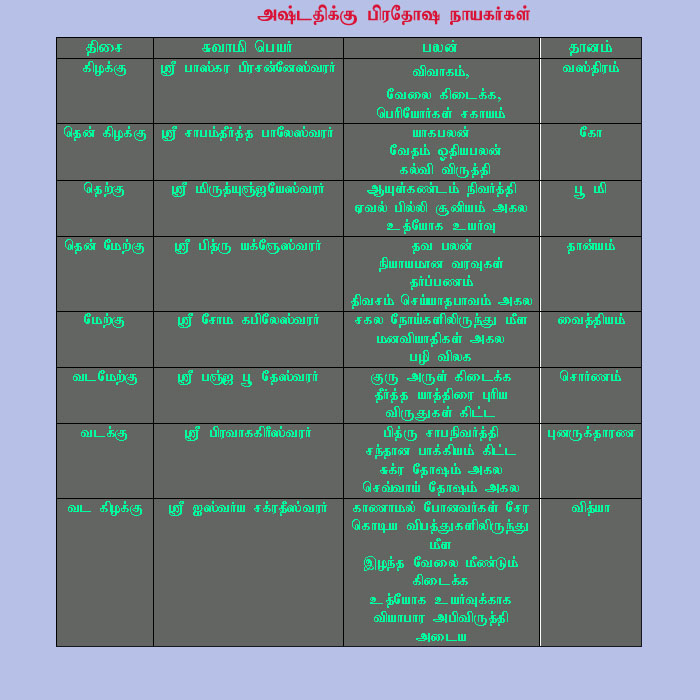
Pradhosham is one of the important days of celebration for Lord Shiva. It is celebrated on Triyodhasi Thithi after every Full Moon and New Moon — that is, it is celebrated twice a month. In all Saivite temples, Pradhosham is celebrated in a grand manner, with the presiding deities being Lord Shiva, Goddess Parvathi, and Nandhi. It is observed between 4:30 p.m. and 6:00 p.m.
History
In the aftermath of a curse by Sage Duruvasar, Devas and their king, Indra, had become inglorious and powerless. It was as though they had been abandoned by the Gods. They remained engulfed in darkness. Their eternal foes, the Asuras, were quick to seize the opportunity and conquer the weakened Devas. Indra was dethroned and driven out along with his subjects. Feeling helpless and utterly humiliated, they went to Brahma, the Creator, and sought his help, explaining their predicament. Brahma took them to the abode of Vishnu, since it is He who preserves the order of the universe. Indra and the Devas surrendered to Vishnu and prayed for their redemption. Lord Vishnu told them that the only way out was to secure the Nectar of Immortality — and for that, they would have to strive immensely, casting all kinds of plants, herbs, grasses, and creepers into the Ocean of Milk, and churning the ocean using Mount Mandara as a churn-staff and Vasuki, the king of serpents, as the churning rope.
Bali, King of the Asuras, and his chiefs agreed to the proposal, and peace was made between the Devas and Asuras. Indra and Bali rallied their forces and began the task of lifting Mount Mandara. Uprooting the mountain, they carried it toward the seashore, but before they had gone halfway, the forces found themselves unable to bear its weight any longer, and the mountain came crashing down, killing large numbers of Devas and Asuras. Heartbroken, Indra appealed to Lord Vishnu, who appeared upon His vahana Garuda and, with a mere glance, revived the dead. Placing Mount Mandara on Garuda's back, He carried it to the seashore, where the Devas and Asuras followed. Once the mountain was safely set down, Vishnu asked Garuda to withdraw, so that Vasuki — Garuda's natural enemy — would not stay away out of fear. With Garuda gone, Vasuki arrived at Vishnu's summons and, assured that he too would share in the Nectar and that the mountain's rugged surface would not harm him, allowed himself to be wound around Mandara as the churning rope.
The Devas and Asuras began churning the ocean with joy, but Mount Mandara, having no support, soon began sinking. Even the mightiest among them could not hold it up. Only Lord Vishnu could — taking the form of a giant tortoise, Kurma, He plunged into the ocean and rose again bearing the mountain on His back. The churning resumed, but no matter how long they toiled, nothing emerged, until Vishnu Himself joined in the churning. As the effort intensified, the ocean's concentrated impurities gave rise to a deadly poison — black in color — while Vasuki, unable to bear the strain, released his own poison, blue in color, from his thousand mouths. The two combined into a blackish-blue poison called Aalakaalam, sending up choking fumes that overwhelmed both Devas and Asuras.
Not knowing what to do, the Devas rushed to Kailash and begged Lord Shiva to save them. Shiva asked Sundarar and Nandhi to gather the deadly poison from the Ocean of Milk and bring it to him. He then took it in His palm and swallowed it. Fearing the poison would harm the entire universe if it passed further, Goddess Parvathi stopped it at His throat. Since "Kandam" means throat, Lord Shiva came to be known as Thirunīlakandar, the blue-throated one. The day He consumed the poison was Ekadasi; the following day, Dwadasi, He rested in Sayana Koolam. On the third day, Triyodhasi, between 4:30 p.m. and 6:00 p.m., Lord Shiva and Goddess Parvathi performed the Sandhya Tandavam — the twilight cosmic dance — while Goddess Saraswathi played the veena, Lord Indra played the flute, Lord Brahma kept the beat (Thaala), Goddess Lakshmi sang, and the other Devas looked on in joyous celebration.
Types of Pradhosham
Nithya Pradhosham
Daily evening between 4:30 p.m. and 6:00 p.m. is considered as the Daily Pradhosham, or Nithya Pradhosham.
Paksha Pradhosham
As Pradhosham is celebrated twice a month, the one falling in Krishna Paksham is Krishna Paksha Pradhosham, and the one falling in Sukla Paksham is Sukla Paksha Pradhosham.
Maatha Pradhosham
The Krishna Paksha Pradhosham is also regarded as the "Maatha Pradhosham," or Monthly Pradhosham.
Mahaa Pradhosham
When the Krishna Paksha Pradhosham falls on a Saturday, it is regarded as Mahaa Pradhosham, since Lord Shiva performed the Sandhya Tandavam on a Saturday, Krishna Paksha Triyodhasi.
Benefits of Observing Pradhosham
| Pradhoshams Attended | Benefits |
|---|---|
| 1 Pradhosham | Good things will happen, evils will disappear. |
| 3 Pradhoshams (Continuous) | Equal to seeing Lord Shiva, Lord Vishnu & Lord Brahma at the same time. |
| 5 Pradhoshams (Continuous) | Diseases vanish from the body. |
| 7 Pradhoshams (Continuous) | Unmarried girls will get married. |
| 11 Pradhoshams (Continuous) | Mind and body gain new energy and strength. |
| 13 Pradhoshams (Continuous) | Desired wishes are fulfilled without obstacles. |
| 21 Pradhoshams (Continuous) | Childless couples will be blessed with a child. |
| 33 Pradhoshams (Continuous) | Equal to performing Kumbabishekam for a Saivite temple. |
| 77 Pradhoshams (Continuous) | Equal to performing one "Yuthra Yaga." |
| 108 Pradhoshams (Continuous) | Equal to performing one "Devendra Pooja." |
| 121 Pradhoshams (Continuous) | No next Janmam (rebirth). |
| 1008 Pradhoshams (Continuous) | Equal to performing one "Aswametha Yaga." |
Lord Shiva and Goddess Parvathi performing the Sandhya Tandavam at Pradhosham time.