About Chhinnamasta
The sixth form of Mahavidya is Chhinnamasta. The word Chhinnamasta is made up of two words: 'Chhinna', meaning incised, separated or isolated, and 'Masta', meaning forehead — thus, the one whose head is separated from the body is called Chhinnamasta. The Goddess cuts her own head with her own hands and holds it in her hands, and is also known by other names such as the mighty Chandika.
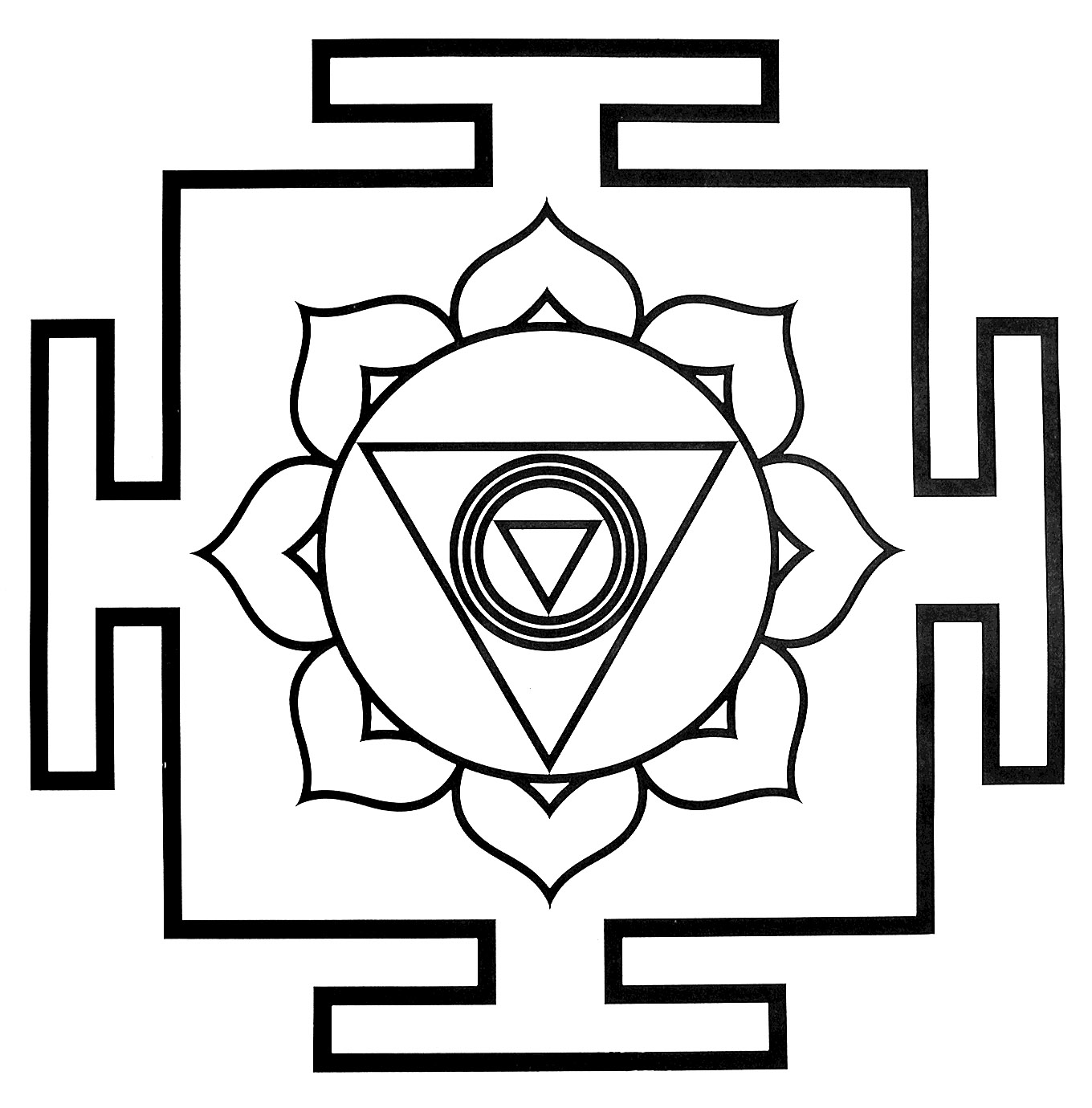
Divine Goddess Durga is the form of Chinnamasta; the Goddess herself embodies the three qualities of Satvik, Rajasik and Tamasik, represented by three triangularities. The Goddess represents the Universe's cycle of transformation, through which the entire universe continuously moves. Being both a balanced and a constructive force of destruction is essential for the smooth operation of the universe. Goddess Chinnamasta is worshiped in Jainism and Buddhism as well, and in Buddhism, the Devi is known by the name Chinnamunda Vajravarahi.
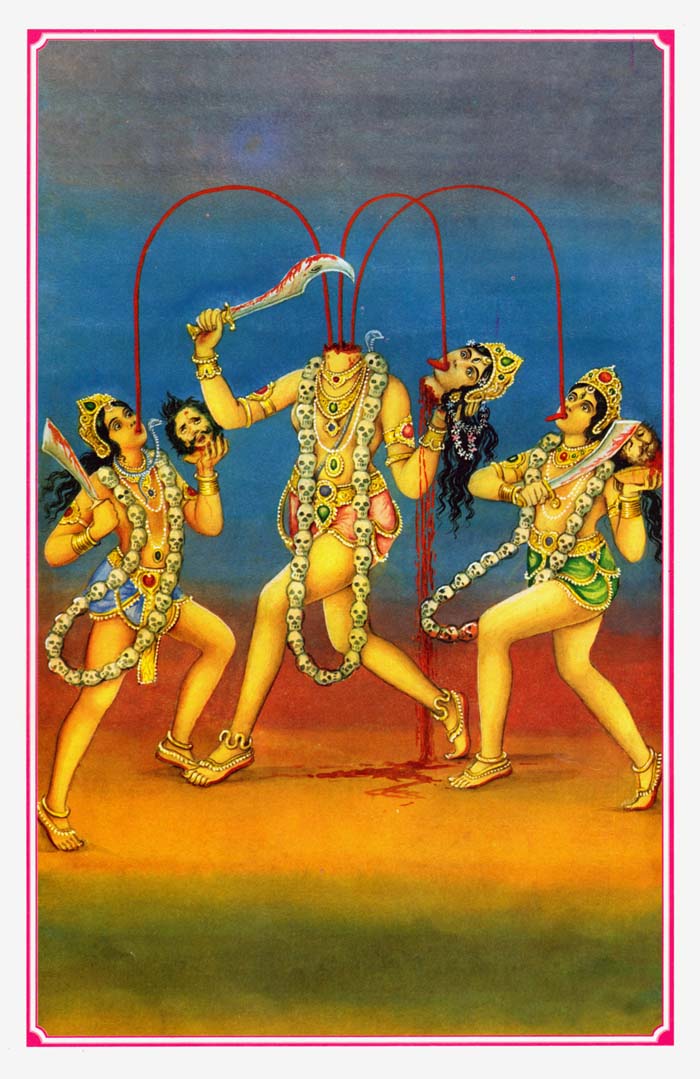
She embodies the divine truth of life and death — the origin of new life from desire, and ultimately the symbol of death. The Goddess represents the benefits of self-control against unnecessary and excessive aspiration, and the practice of yoga through divine power, self-control and mastery over rising desire, particularly the suppression of sexual desire. Devi Chinnamasta dissolves all forms of ego. She is depicted naked with scattered hair, with Kamadev and his consort Rati Devi standing on a lotus beneath her, in a fierce form. Her complexion is described as reddish-golden, with the fullness of a girl of sixteen, adorned with jewels and a garland of severed heads (Mundamala), and holding the sacrificial thread of serpents.
On her head she wears a crown set with priceless gems, and she has three eyes. In her right hand she holds her own severed head, cut by her own sword, and in her left hand she holds the sword itself. Three streams of blood flow from her neck — one she drinks herself, while her two attendant yoginis, named Jaya and Vijaya (or Dakini and Varnini), drink from the other two. Both attendants stand naked beside her, holding swords and skull-cups. Dakini embodies the Tamo guna (the destructive aspect of nature), while Varnini, of a reddish hue, embodies the Rajasic quality associated with creation. Together the three appear terrifying and fierce, a symbol of the great destruction born of divine wrath.
Beeja Mantra

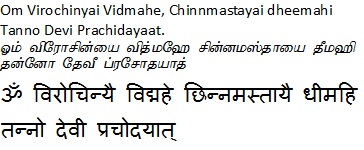
Gayatri